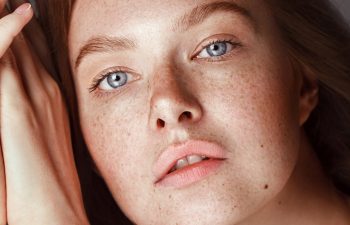
There’s a particular kind of damage that accumulates slowly and reveals itself all at once. For years, the skin manages — melanocytes absorbing UV, repair mechanisms patching over breaks, the architecture holding up. Then, somewhere in the late 30s or 40s for most people, the cumulative account comes due. Brown spots appear where skin was even. Redness that wasn’t there before settles across the cheeks and nose. Sun damage that was invisible during a Cincinnati summer at Devou Park or along the Ohio River waterfront suddenly has a very visible face, quite literally.
This is not a cosmetic grievance without clinical backing. Photoaging — the accelerated aging of skin caused by cumulative UV exposure — produces measurable structural changes in the dermis: collagen fragmentation, elastin deterioration, melanin irregularities, and vascular changes that produce the visible signs most people associate simply with “getting older.” Much of what patients attribute to the natural aging process is, in fact, sun damage that could have been modified, prevented, or treated.
At Queen City Dermatology in Cincinnati, Dr. Kristine Zitelli approaches sun damage with the clinical specificity that comes from specialized training at the University of Cincinnati and research experience at the University of California, San Francisco. Recognized as a Cincinnati Magazine Top Doctor continuously since 2016, Dr. Zitelli — a board-certified dermatologist and Cincinnati native — brings both the medical rigor and the genuine community investment that makes this practice distinctive. Her assessment of photoaged skin is comprehensive: what type of damage is present, how deep it sits, what combination of treatments addresses it most effectively, and how to protect the result.
What Sun Damage Actually Looks Like — Clinically
The visible signs of sun damage are well-known but frequently misattributed. Understanding what each finding represents clinically changes how patients think about treatment options.
- Solar lentigines — flat brown spots, often called “age spots” or “liver spots” — are localized areas of melanin accumulation caused by UV-induced changes in melanocyte behavior. They are not caused by aging per se; they are caused by sun exposure and can appear as early as the 30s in patients with significant UV history.
- Diffuse redness and visible blood vessels — particularly across the cheeks, nose, and chest — reflect UV-induced vascular changes in the dermis. Small capillaries dilate, become permanently visible, and contribute to the generalized redness that makes skin look blotchy and inflamed even in the absence of active rosacea.
- Uneven skin texture — roughness, pore enlargement, and a loss of the smooth surface quality that characterizes younger skin — results from collagen degradation in the upper dermis. As UV exposure breaks down the structural protein matrix, the skin’s surface loses the even architecture that reflects light uniformly.
- Hyperpigmentation patterns — irregular darkening that doesn’t fit the flat, discrete pattern of solar lentigines — can include melasma (hormonally influenced and UV-aggravated) and post-inflammatory hyperpigmentation from prior skin conditions or injuries.
- Actinic keratoses — rough, scaly patches that are pre-cancerous lesions and require medical attention — are the most clinically significant manifestation of cumulative UV damage. Regular skin cancer screenings are the appropriate response; these are not cosmetic concerns.
Why IPL Is the Summer Photodamage Treatment of Choice
Intense Pulsed Light (IPL) photofacial is one of the most effective and versatile treatments for the visible consequences of sun damage, and Queen City Dermatology’s Nordlys system delivers it at a precision that general med spa equipment cannot match.
IPL works by delivering broad-spectrum light energy in controlled pulses that target specific chromophores in the skin — melanin in brown spots and hemoglobin in blood vessels — without significantly damaging the surrounding tissue. The targeted cells absorb the light energy, heat, and are broken down by the body’s natural clearance mechanisms. Brown spots darken temporarily after treatment and shed within one to two weeks. Redness and visible vessels fade progressively over the same period.
The result, over a series of treatments, is significant improvement in evenness of tone, reduction in diffuse redness and visible capillaries, and a general brightening and clarity of the complexion. Most patients describe the outcome as looking more rested, more even, and younger — without looking like anything clinical happened.
Several practical considerations make IPL work best when planned thoughtfully:
- Tan skin is a contraindication. IPL energy targeting melanin will target a tan as readily as it targets a sun spot, increasing the risk of burns or hypopigmentation. Treatment is most effective — and safest — on untanned skin. This means scheduling IPL in June, before the summer tan accumulates, or planning for fall treatment after the tan has fully faded.
- Sun avoidance is required post-treatment. The two weeks following IPL require disciplined sun protection: hats, SPF, and minimal peak-hour UV exposure. This is straightforward to manage when the treatment is planned around it.
- Multiple sessions produce the best outcomes. Most patients see meaningful improvement after two to three sessions, with the full course typically spanning three to five treatments spaced several weeks apart.
Sun Protection: The Treatment That Never Expires
Dr. Zitelli’s patient conversations about photoaging consistently return to the same foundational point: the best treatment for sun damage is the protection that prevents it from accumulating. For patients in Cincinnati — where summer genuinely draws people outdoors to Smale Riverfront Park, the walking trails along the Little Miami, and the Reds games at Great American Ball Park — this means building sun protection habits that match the actual exposure their skin is getting.
Broad-spectrum SPF 30 or higher applied daily, regardless of cloud cover, is the clinical minimum. Reapplication every two hours during active outdoor time. Protective clothing and hats for peak UV hours between 10am and 4pm. These aren’t restrictions; they’re the practices that allow Cincinnati patients to enjoy summer without advancing the skin damage that IPL and other treatments work to correct.
Schedule Your Sun Damage Consultation in Cincinnati
Queen City Dermatology is located at 8350 E. Kemper Road, Suite A, in Cincinnati, Ohio, serving patients throughout the Greater Cincinnati area and Montgomery neighborhood. The practice is open Monday through Thursday from 8am to 4pm and Friday from 8am to noon.
Call (513) 202-3883 or schedule online. Whether the concern is purely cosmetic or includes the kind of changing spots that warrant a closer medical look, Dr. Zitelli and her team are the right starting point for understanding what Cincinnati summers have been doing to your skin — and what can be done about it.
Medically reviewed by Kristine Zitelli, MD, FAAD on
Posted on behalf of
8350 E Kemper Rd Suite A
Cincinnati, OH 45249
Phone: Call 513-202-3883
FAX: 513-296-6894
Email: [email protected]
Opening Hours
Monday - Thursday
8:00 am - 4:00 pm
Friday
8:00 am - 12:00 pm